
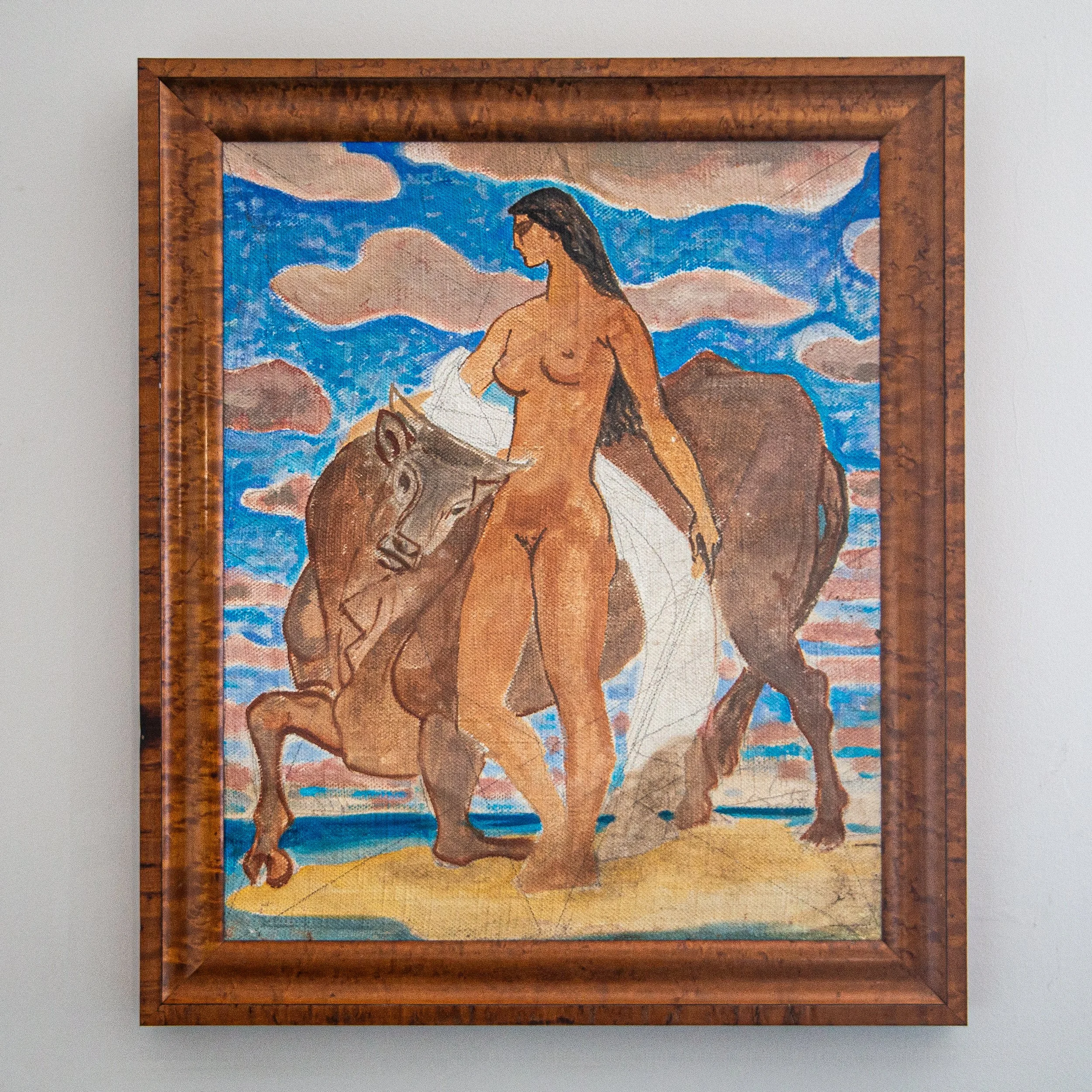
THE ABDUCTION OF EUROPA
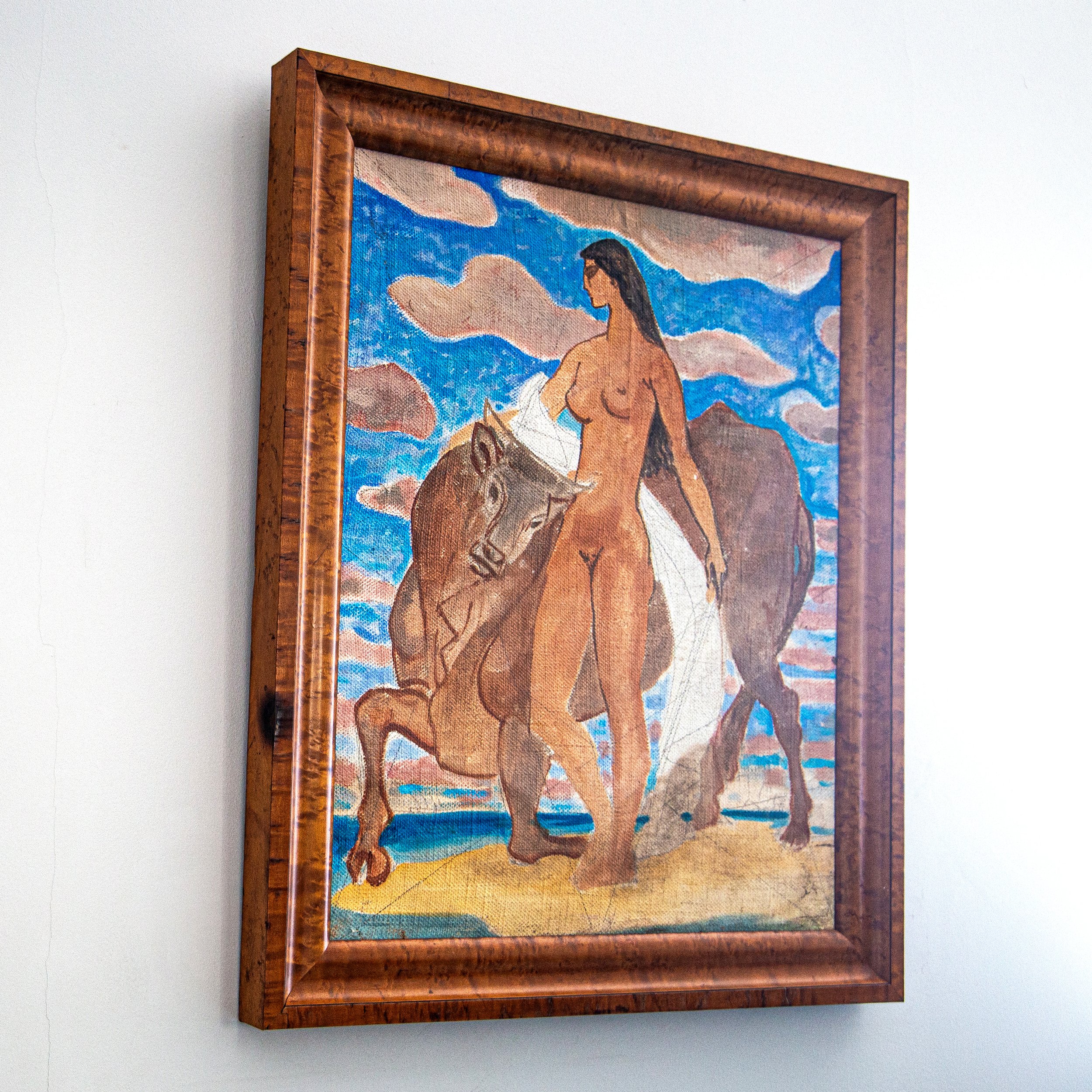
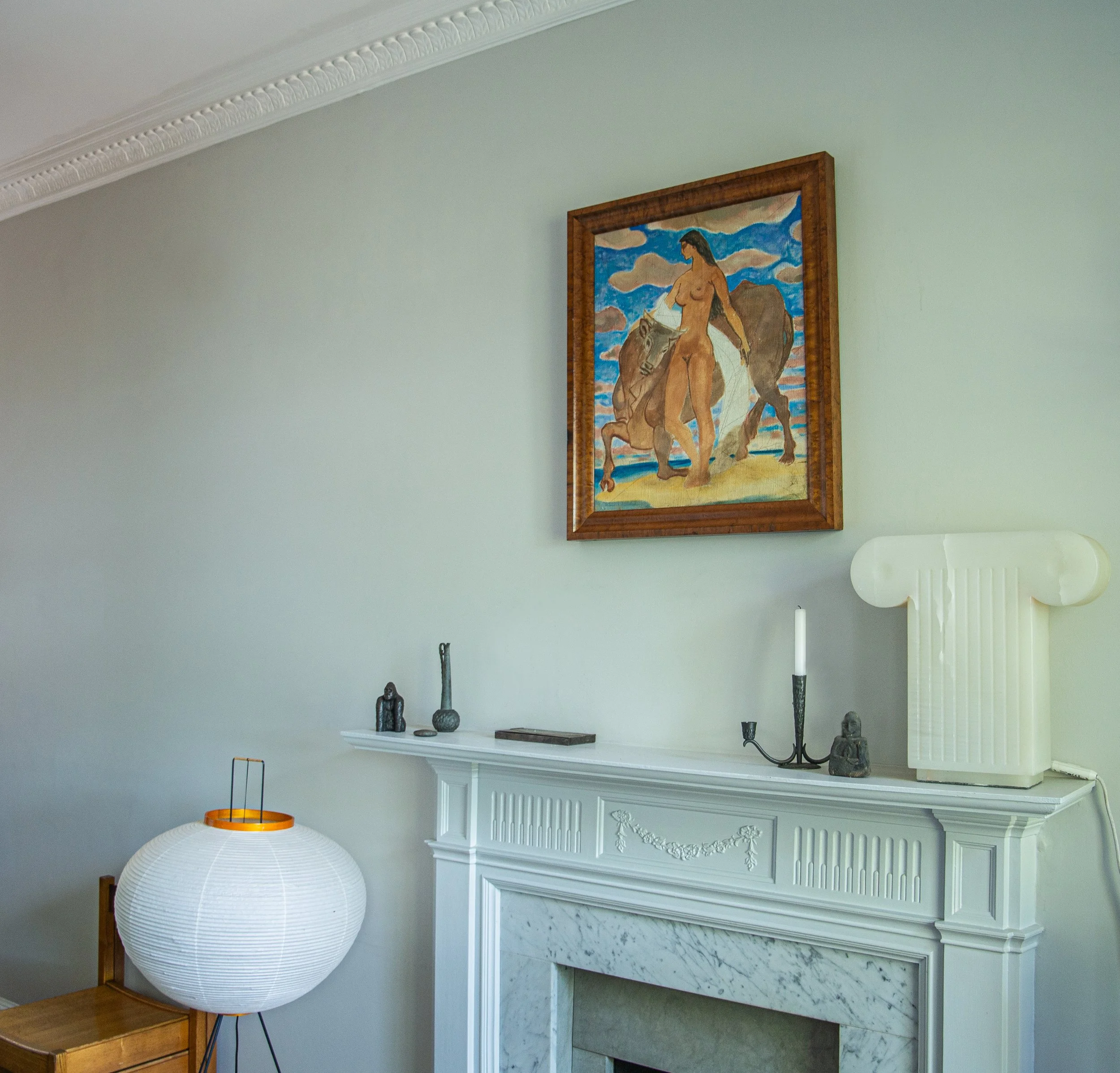
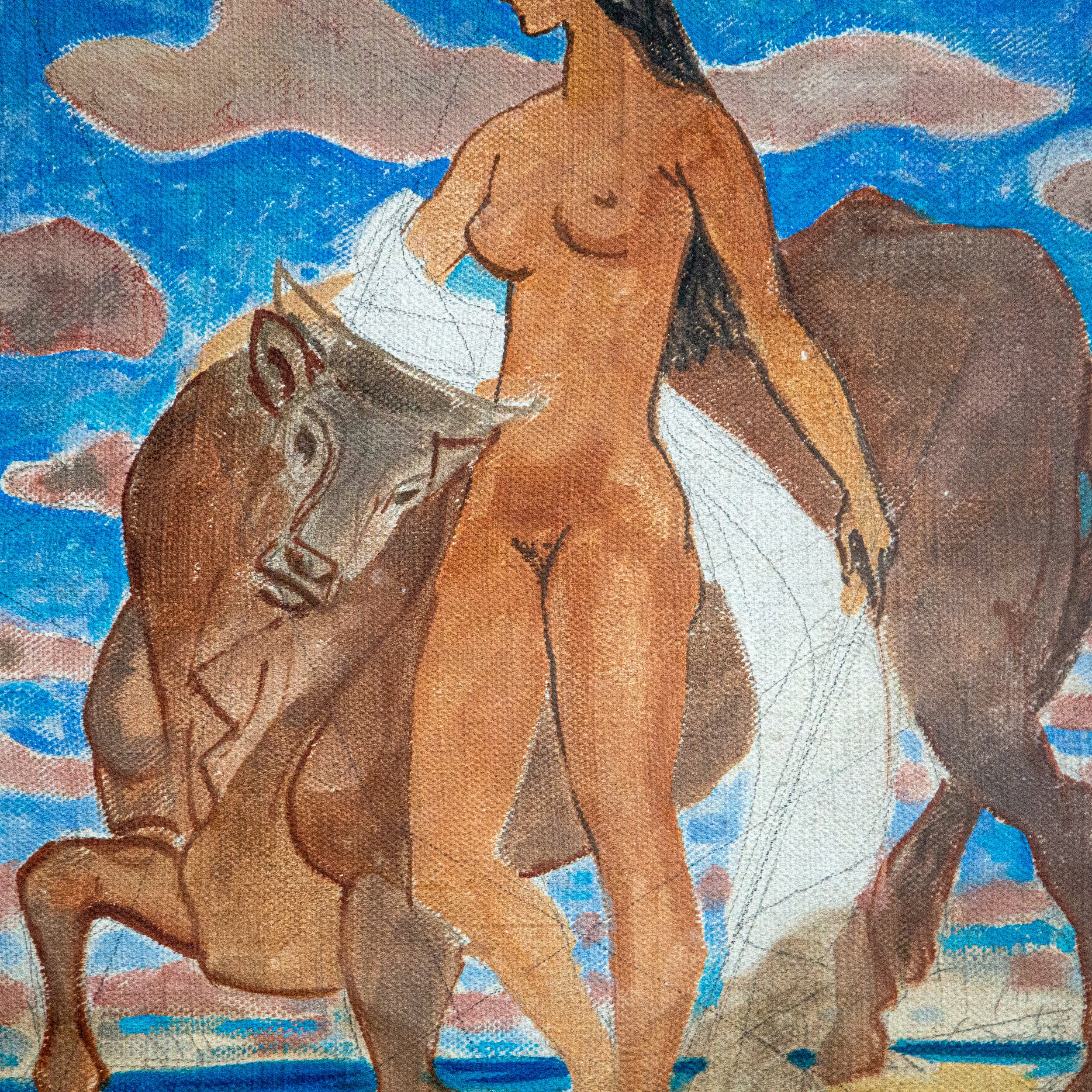
THE ABDUCTION OF EUROPA
France, c1930s
Henri-Marius Petit (1913-2009) - Oil on canvas, Studio artist’s label on verso of canvas
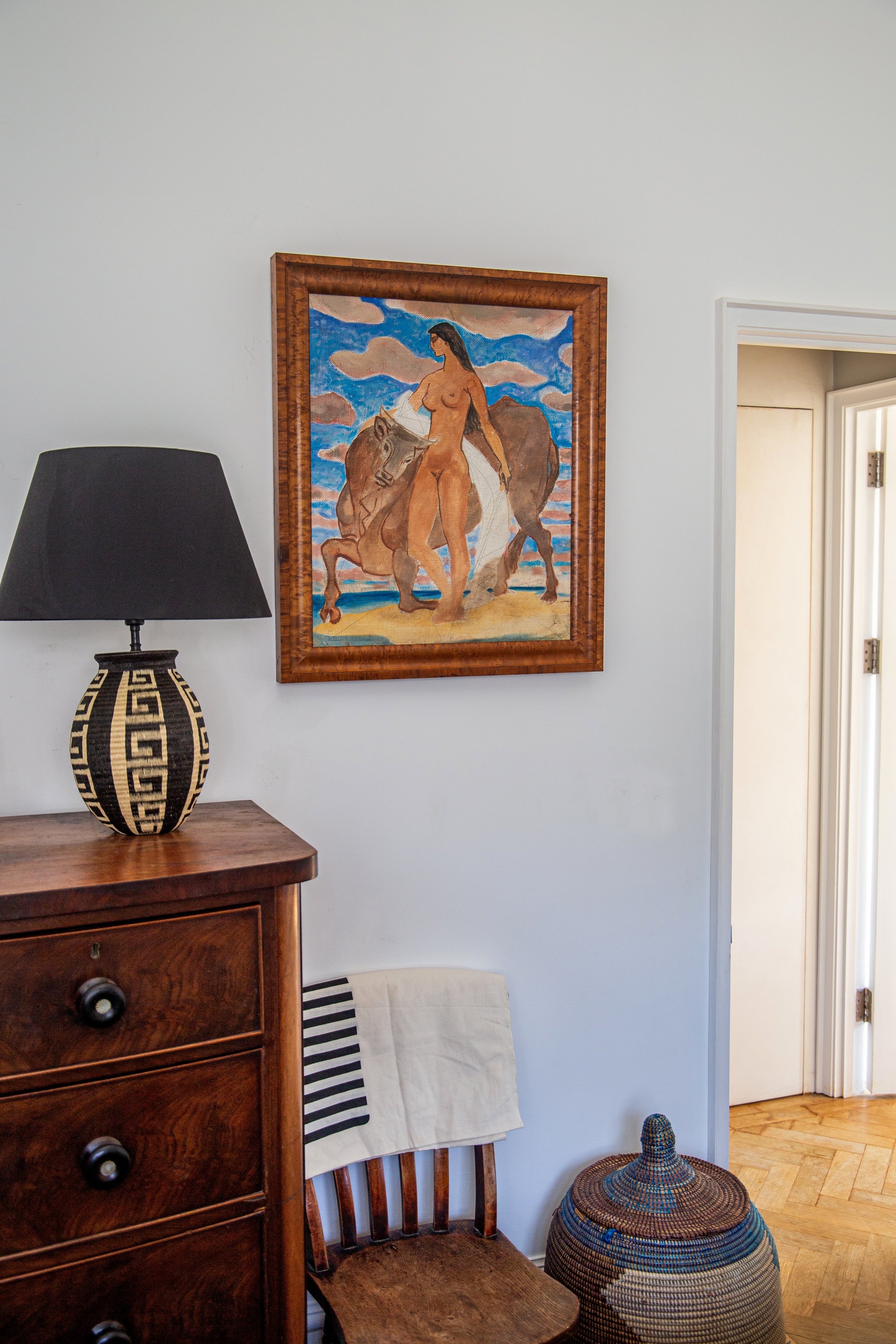
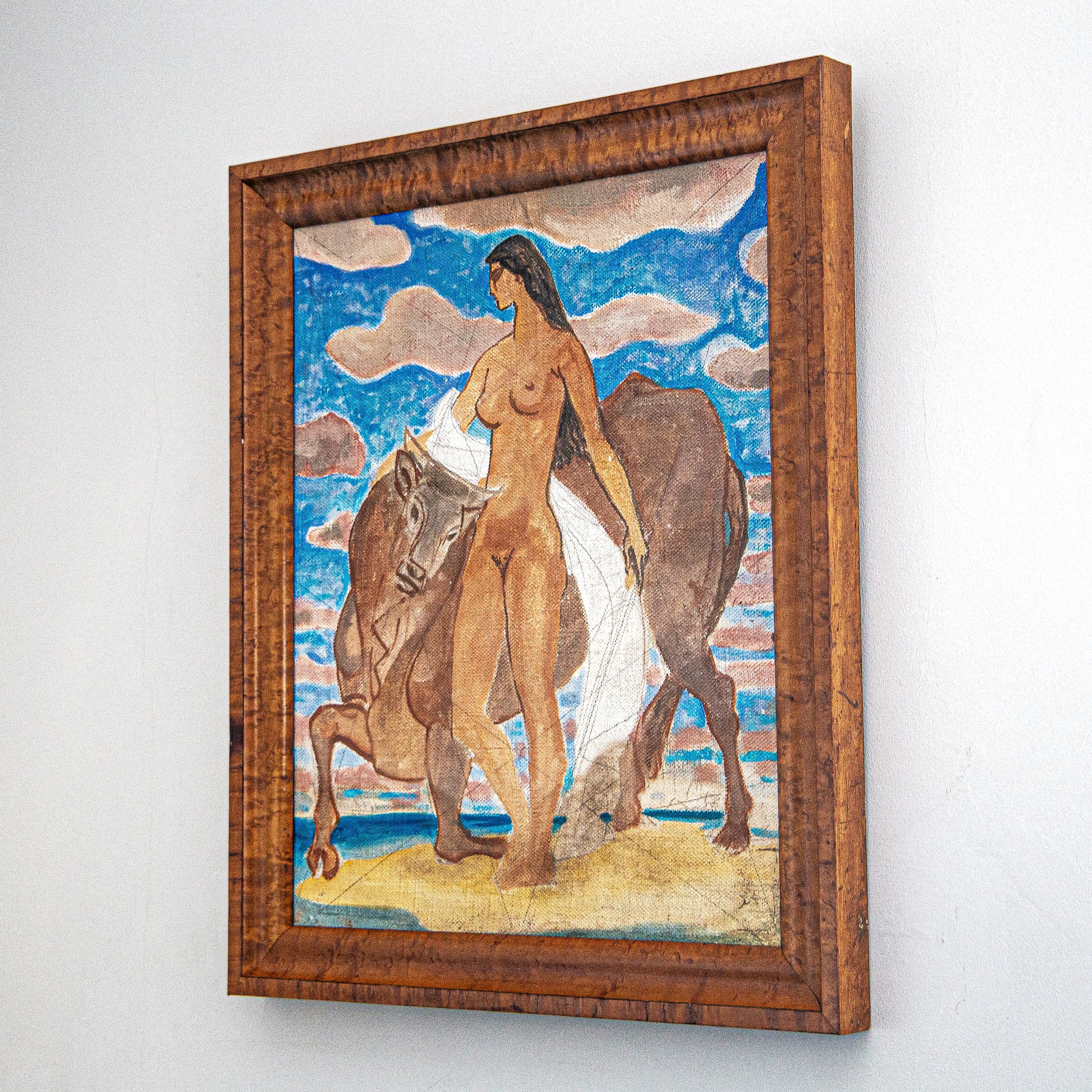
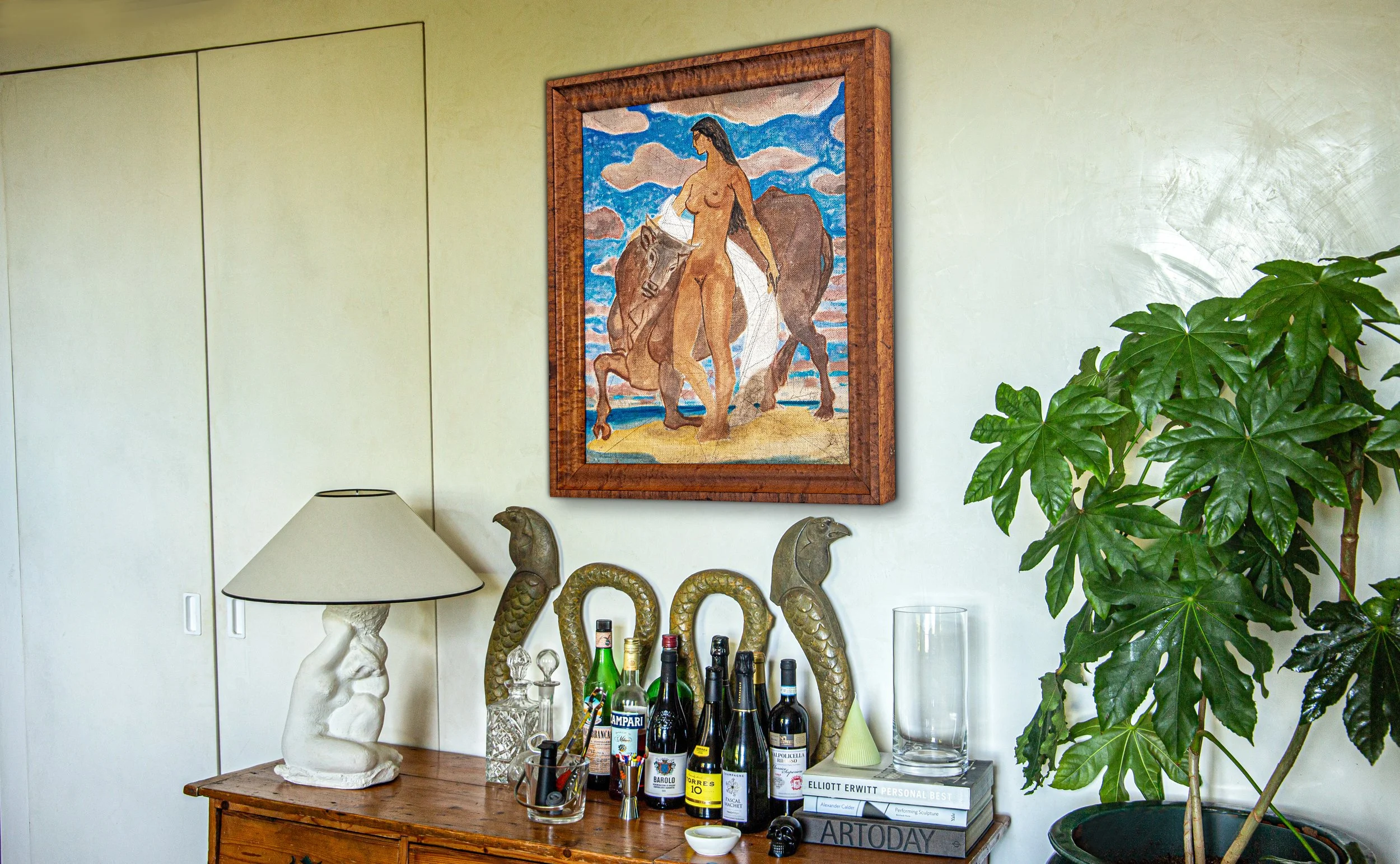
A hugely compelling energetic composition resonant with impressionistic nuances and distilled shapes associated with the Art Deco movement and modernism. A delightful matisse like flowing use of line and brush stroke. Presented in a substantial burr maple period frame.
Dimensions: H 74cm x W 62.5 cm (framed)
———-
The myth:
The legend spoke that Europa, a Phoenician princess, daughter of Agenor king of Tyre was walking one day along the seashore with her companions, and was noticed by Zeus. Kindled by her beauty, the God transformed himself into a white bull with a crescent moon-shaped horn and sat down at the feet of the young girl. Frightened at first, the princess grew bolder, caressed the animal and sat on his back. Immediately the bull got up and rushed towards the sea. Despite the cries of Europa, who clung to the horns, the bull stepped into the waves and moved away from the shore. They reached as far as Crete, where Zeus resumed his human appearance and mated with Europa. Out of this love, three sons born: Minos, Rhadamanthus and Sarpedon.
Following this legend was the search conducted by the brothers of the princess. The king Agenor commanded his son Cadmus to go in search for his sister, with a formal prohibition to return to Tyre, as long as he did not find her. The mother of Cadmus, Telephassa, and two of his brothers, Thassos and Cilix, accompanied him in his quest, and only Phoenix remained in the country with his father the king.
The search of the queen and her sons was unsuccessful. Telephassa died of grief, and because of the oath to their father, the three sons dared not return home. Thassos gave up the search and went to settle in Thrace Islands, with whom he identifies himself. Cilix established himself in Cilicia, of which he was the legendary founder. As for Cadmus, he disembarked in Greece, where he interrogated the Delphic oracle, who advised him to be guided by a heifer wandering, whom he would cross on leaving the temple, and then go found a city on the very spot where it would sleep out of exhaustion. Cadmus followed the animal until the site of Thebes, and he built the citadel of Cadmea. Still hoping to find his sister, Cadmus offered to the Greeks the alphabet invented by the Phoenicians for some information about Europa. Herodotus tells the narrative as follows:
"Now these Phoenicians settled in this country of Boeotia, who came with Cadmus, of whom were the Gephyreans, brought in among the Hellenes several knowledge, and especially that of letters, which did not exist, which appears to me, among the Hellenes before this time; They first brought in those which are used generally by the Phoenician race, but afterwards, as time went on, they changed with their speech the form of the letters also. During this time the Ionians were the race of Hellenes who dwelt near them in most of the places where they were; and these, having received letters by instruction of the Phoenicians, changed their form slightly and so made use of them, and in doing so they declared them to be called "Phoenician", as was just, seeing that the Phoenicians had introduced them into Hellas." (Hérodote, II, 58).